Skip to navigation
Skip to main content


Articles

Bloating is one of the most common gut complaints in Malaysia, and usually the easiest to improve once you know what’s behind it. This guide covers the main causes of a bloated stomach, how to reduce bloating day to day, and when it’s worth looking deeper at your gut.
What does a bloated stomach feel like?
Bloating is a full, tight or swollen feeling in your tummy, often with wind or rumbling. It tends to build through the day or after meals and settle overnight. Some people also see their waistband get tighter within a few hours of eating.
Common causes of bloating
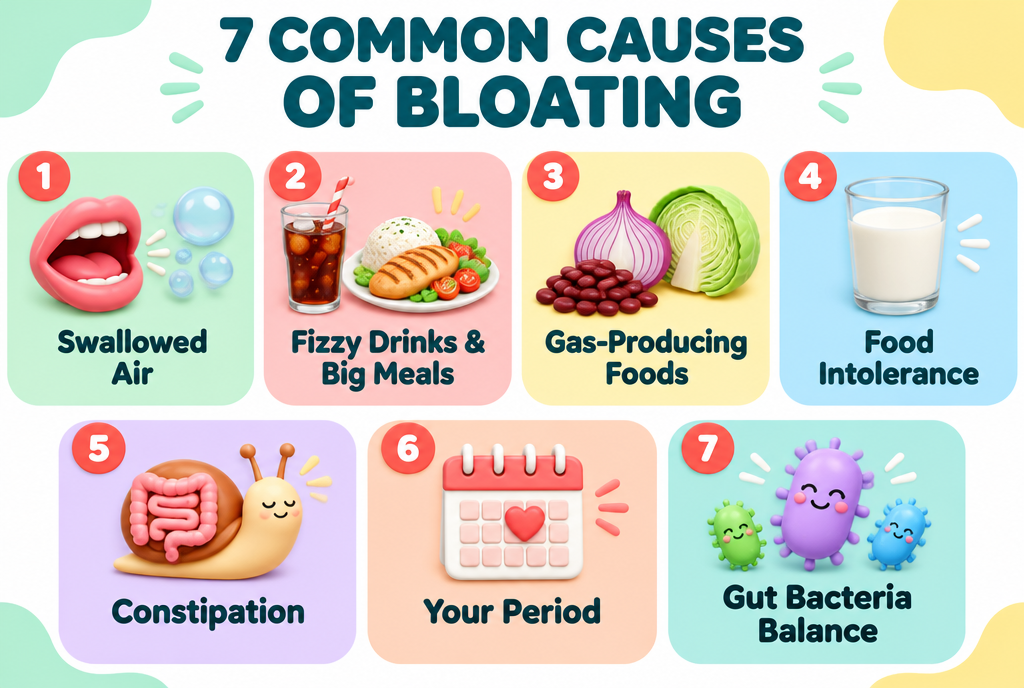
1. Swallowed air
Eating quickly, talking while eating, chewing gum and drinking through a straw all push extra air into your gut.
2. Fizzy drinks and big meals
Carbonated drinks add gas directly. Large or late-night meals give your gut more to process at once, which many people feel as bloating after eating.
3. Gas-producing foods
Beans, lentils, cabbage, onions, garlic and some fruits contain carbohydrates your gut bacteria ferment, producing gas. They are healthy foods, and the amount that bothers you differs from person to person.
4. Food intolerances
Lactose in milk and dairy is a common trigger in Asia. If bloating follows teh tarik, milk or ice cream, it is worth noting. Our Food Intolerance Test can help narrow down your triggers.
5. Constipation
When stool moves slowly, gas builds up behind it. More water, regular movement and soluble fibre such as oats help keep things moving.
6. Your period
Many women notice bloating in the days before or during their period, linked to hormonal changes.
7. The balance of your gut bacteria
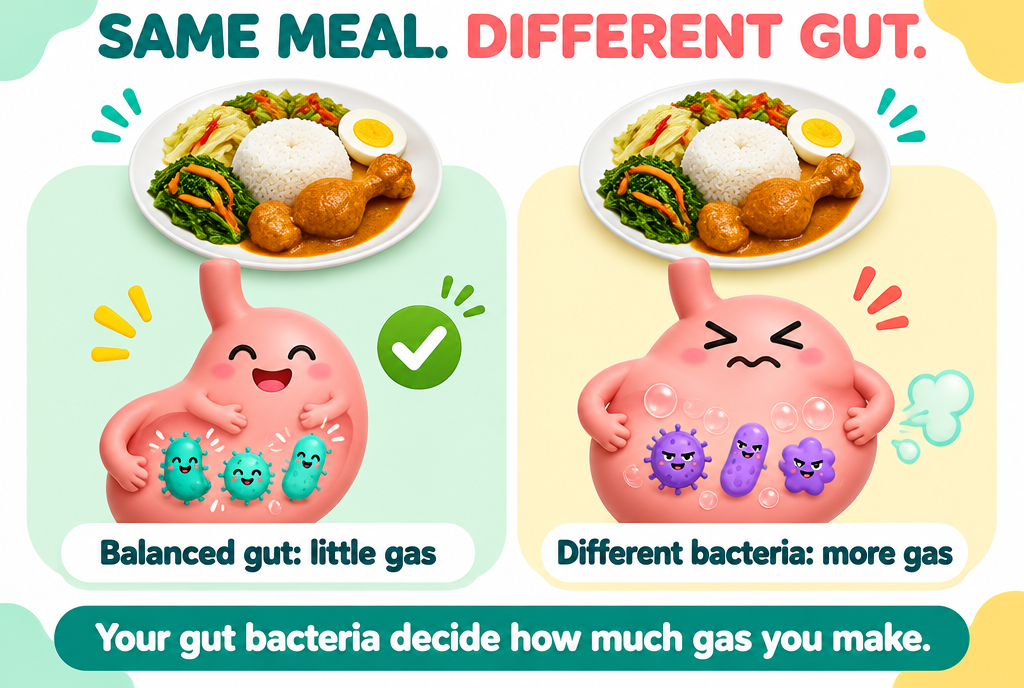
Trillions of bacteria live in your gut, and the mix is different in everyone. Which bacteria dominate affects how much gas you produce from the same meal. That is why two people can eat the same nasi campur and only one feels bloated.
How to reduce bloating: 8 practical steps
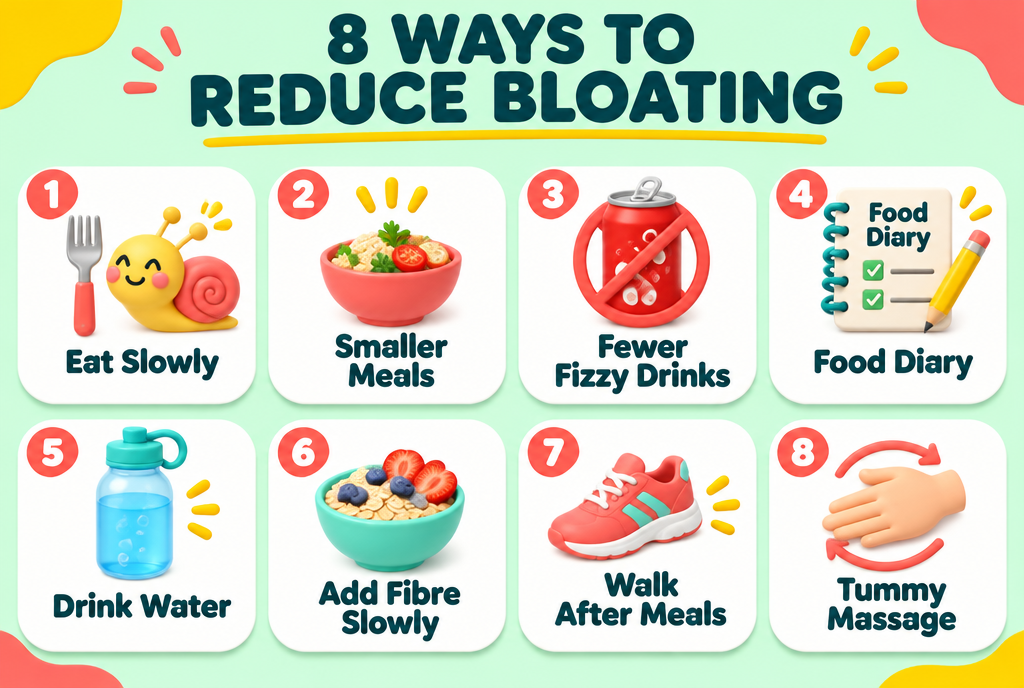
- Eat slowly and chew with your mouth closed to swallow less air.
- Go smaller and more often instead of one heavy meal, especially at night.
- Cut back on fizzy drinks, alcohol and lots of caffeine.
- Keep a food diary for two weeks and note when bloating hits. Patterns show up fast.
- Drink plenty of water through the day.
- Add fibre gradually. Oats and linseed are gentle starting points.
- Move after meals. A 10 to 15 minute walk helps gas pass.
- Gently massage your tummy in slow clockwise circles.
A pharmacist can also advise on over-the-counter options for gas or constipation.
Still bloated? Stop guessing and look inside
If you’ve tried the basics and bloating keeps coming back, the answer is often in your gut bacteria. Two tests can help:
- GUT16 Gut Health Test: sequences the bacteria in one at-home stool sample, compared against Southeast Asian gut data. We pick the sample up from your door in Malaysia or Singapore, and your first month of a matched GutPro probiotic is included. RM1,700.
- Digestive and Gut Blood Test: a quick first look at digestion-related markers from a blood sample.
When to see a doctor
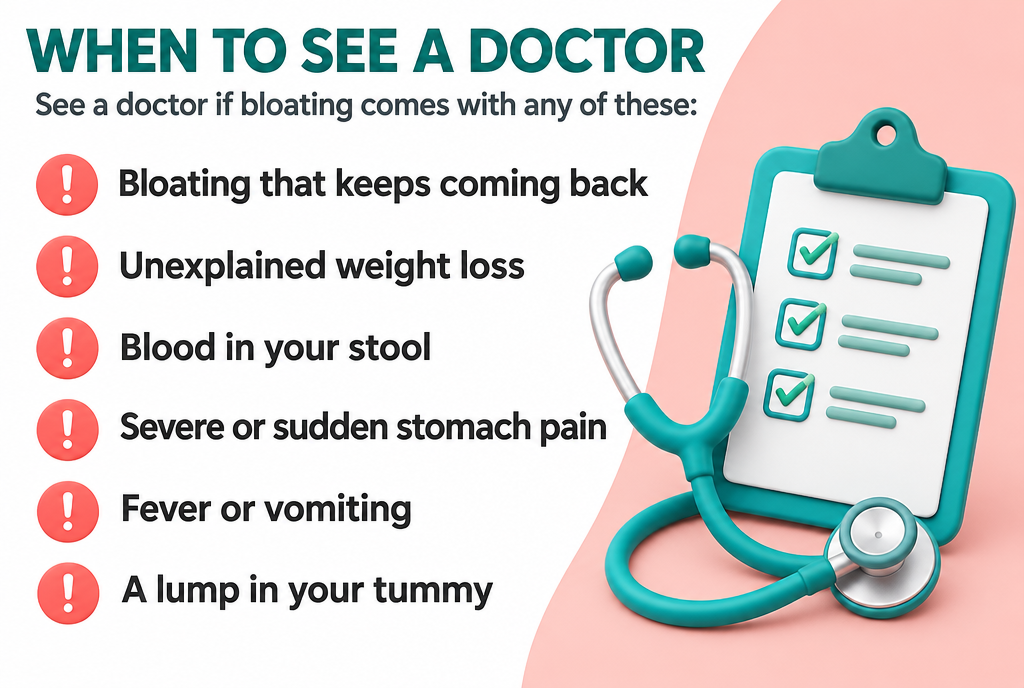
See a doctor if you often feel bloated and diet changes haven’t helped, or if bloating comes with unintentional weight loss or blood in your stool. Get urgent medical help for bloating with severe or sudden stomach pain, fever, vomiting, a lump in your tummy, or if you can’t pass stool or wind.
Frequently asked questions
Why am I always bloated?
Frequent bloating is usually linked to eating habits, trigger foods, constipation or the balance of your gut bacteria. A food diary helps spot patterns, and a gut microbiome test shows which bacteria dominate your gut.
How do I reduce bloating fast?
Take a gentle walk, massage your tummy in clockwise circles, sip water and avoid fizzy drinks. These help trapped gas move along.
Why do I get bloated after eating?
Eating quickly, large meals and gas-producing or trigger foods are the most common reasons. Smaller meals eaten slowly help most people.
Can a gut test help with bloating?
Yes. A gut microbiome test like GUT16 shows the bacteria living in your gut, so you can choose diet changes and a probiotic that fit your own gut rather than guessing.
This article is general information, not medical advice. Source: NHS, Bloating.