 Skip to navigation
Skip to main content


Blog
Probiotic for kids: when it helps and how to choose one
Many Malaysian parents look for a probiotic for kids after a course of antibiotics, a tummy bug, or a picky-eating phase. Here is when the research shows a real benefit, and how to pick one your child will actually take.
- The clearest research on a probiotic for kids is during antibiotics: it cut antibiotic-related diarrhoea by more than half in a Cochrane review.
- Lactobacillus rhamnosus GG (LGG) is one of the most studied strains in children.
- Pick a format your child accepts. Sachets poured on the tongue work for many kids.
- Proxygen PV+: RM88 for 30 sachets, for kids from 3.
A probiotic for kids is most useful during and after antibiotics. A Cochrane review of 33 trials in children found that probiotics reduced antibiotic-associated diarrhoea from about 19% to 8%. Lactobacillus rhamnosus GG is one of the best-studied strains. Otherwise, fibre, fruit and fermented foods do most of the work for a healthy child.
Probiotic for kids, in numbers
These results are for children taking antibiotics. Healthy children eating well may not need a probiotic.
Sound familiar?
Parents usually look up a probiotic for kids in one of these moments.
When does a probiotic for kids help?
The strongest evidence is during antibiotics. Antibiotics can upset the normal gut bacteria and cause loose stools. In a Cochrane review of 33 trials, children who took probiotics alongside antibiotics had much less antibiotic-associated diarrhoea, about 8% compared with 19%. Strains like Lactobacillus rhamnosus GG and Saccharomyces boulardii were among those studied.
For healthy children, however, the benefit is less clear. So start with food, and use a probiotic when there is a reason.

How to choose a probiotic for kids
Named strains
Look for a strain code, such as L. rhamnosus GG. In contrast, vague blends tell you little.
Right age on the label
Check the minimum age. Proxygen PV+ is for kids from 3.
A format your child accepts
Sachets poured on the tongue need no water or fridge.
Halal and allergens
Check for milk, soy or gelatin if your child has allergies.
Food habits that help your child’s gut
A probiotic works best next to good food. For example, give fruit at breakfast, add vegetables to rice, and offer plain yogurt or kefir a few times a week. Also keep water bottles in school bags and limit sweet drinks.
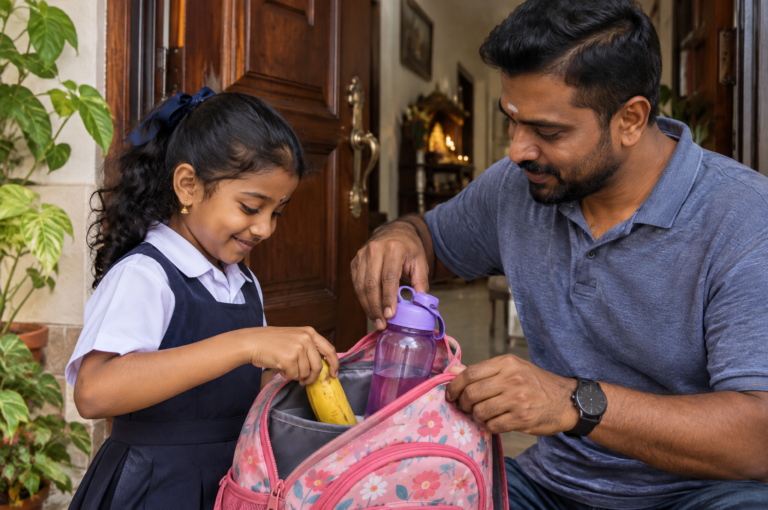
A probiotic for kids is not needed for every child. If your child has diarrhoea with fever, blood or signs of dehydration, see a doctor straight away. Children with weak immune systems should only take probiotics on a doctor’s advice.
Does your child need a probiotic?
Tick what fits.
Probiotic for kids: sachet, chewable or drink?
Choose by what your child will accept.
| Format | Good for | Watch out for |
|---|---|---|
| Tongue sachet (Proxygen PV+) | Kids from 3, no water or fridge | Check age on label |
| Chewable tablet | Older kids who like sweets | Often added sugar |
| Cultured milk drink | Kids who like milk drinks | Sugar content, needs fridge |
Proxygen PV+ is RM88 for 30 sachets.
Our honest take: Use a probiotic for kids when there is a reason, such as antibiotics, and pick a named-strain sachet your child will take. Otherwise, build the food habits first.
Before you buy
Check the strainLGG is one of the most studied in children. Named strains matter.
Check the ageProxygen PV+ is for kids from 3. Ask a doctor for younger children.
Check timingDuring antibiotics, give the probiotic a few hours apart from the dose. Ask your pharmacist.
How to order
Is it right for you?
- Is taking or just finished antibiotics
- Eats little fruit or fermented food
- Is 3 or older
- Is under 3
- Has a weak immune system
- Is seriously unwell
Your options
LGG, LA-5 and BB-46 with prebiotic. Adults and kids from 3. 30 sachets.
Probiotic for kids: questions parents ask
Is a probiotic safe for kids?
For healthy children, probiotics are generally well tolerated. Children with weak immune systems should ask a doctor first.
When should my child take a probiotic?
The clearest benefit is during and after antibiotics.
What age can kids take Proxygen PV+?
From age 3, as stated on the label.
Can probiotics replace vegetables?
No. Fibre from fruit and vegetables feeds the good bacteria.
小孩需要吃益生菌嗎?
服用抗生素期間最有幫助。健康的孩子應先從水果、蔬菜和優格開始。
- Guo Q et al. Probiotics for the prevention of pediatric antibiotic-associated diarrhea. Cochrane Database Syst Rev. 2019;4:CD004827.
- Hill C et al. ISAPP consensus statement on the term probiotic. Nat Rev Gastroenterol Hepatol. 2014;11:506-14.
General information, not medical advice. These are food supplements, not intended to diagnose, address or prevent any disease.