
Articles
What Are Frozen (Cryopreserved) Stem Cells?
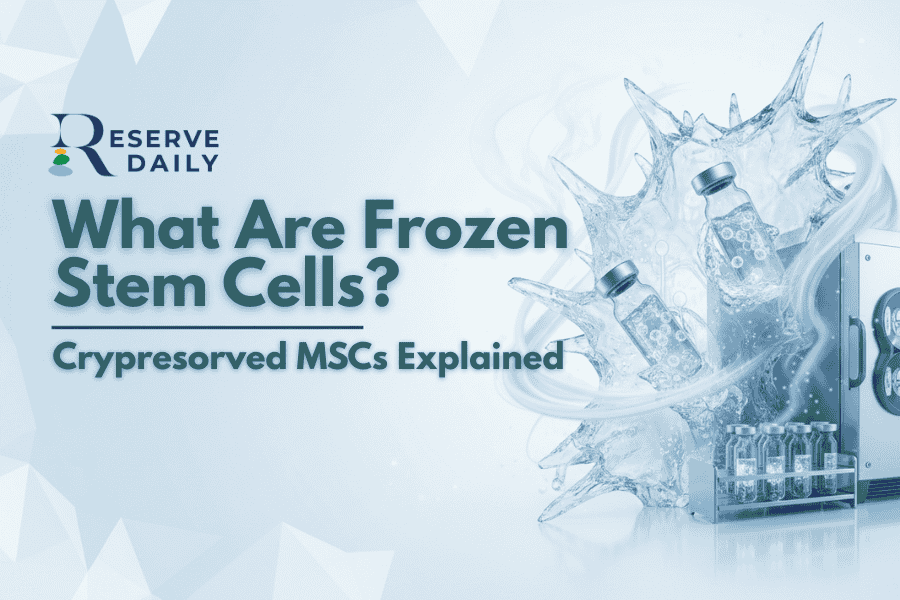
Frozen stem cells — also called cryopreserved MSCs — are mesenchymal stem cells that have been stored at ultra-low temperatures for later use.
This method allows cells to be banked and transported, making them available on demand.
How Are Frozen MSCs Stored?
After processing, the cells are:
- Mixed with a cryoprotectant solution (to prevent ice crystal damage)
- Slowly cooled to -80°C or flash-frozen in liquid nitrogen (-196°C)
- Stored in specialized freezers until needed
- Thawed and prepared just before administration
When handled correctly, frozen MSCs can remain viable for months or even years.
Advantages of Frozen MSCs
- Convenience — Available anytime, no need to coordinate with lab processing
- Logistics — Easier to transport across distances
- Inventory — Clinics can keep stock on hand
Limitations of Frozen MSCs
- Viability loss — Studies show 10–20% of cells may not survive freeze-thaw
- Reduced potency — Some cells lose part of their biological function
- Handling sensitivity — Improper thawing can damage cells further
Have questions about frozen vs live stem cells?
 Chat With Us
 What Does Research Say?
A 2019 study in Cryobiology found that cryopreserved MSCs showed reduced migration ability and lower cytokine secretion compared to fresh cells.
However, a 2020 study in Cytotherapy noted that when proper protocols are followed, frozen MSCs can still deliver meaningful therapeutic effects — though typically not as strong as fresh cells.
Source: Moll G, et al. (2019). Cryobiology. | Gramlich OW, et al. (2020). Cytotherapy.
When Are Frozen MSCs Used?
Frozen MSCs may be appropriate when:
- Fresh cells are not available due to logistics
- Treatment is needed urgently and live cells cannot be prepared in time
- The patient prefers a more flexible scheduling option
Your doctor will discuss which option is best for your situation.
Our Approach
We offer both live and cryopreserved MSCs — but we always recommend live cells when possible, because fresher cells mean stronger results.
Frozen cells remain a valid backup option, processed and stored under strict cGMP standards.
Learn more about our quality standards and how we work.
Disclaimer: This article is for educational purposes only. Stem cell therapy is not FDA-approved and results may vary. Consult a licensed healthcare professional before starting any treatment.